As the year 2011 came to a close,
I found myself generally out touring. Some planned and some surfacing Ad hoc.
My weekend visit to the temple town of Kanchipuram
came in as a last minute invite from my cousin. Or maybe I was nominated
because anyone else would take up more space in the car. Or… ~mist~ the gods
had summoned me… Oooomm.
 We started out by Saturday
afternoon, the shiny winter sun had just passed the head and the Madras bound
Bangaloreans were making sure they had enough loose change. And lots of water. The plan
was simple. We would reach Kanchipuram with
a considerable time between us and the sunset so that we could meet the winds
of Kanchipuram before the inevitable rendezvous
with the Tamil sun.
We started out by Saturday
afternoon, the shiny winter sun had just passed the head and the Madras bound
Bangaloreans were making sure they had enough loose change. And lots of water. The plan
was simple. We would reach Kanchipuram with
a considerable time between us and the sunset so that we could meet the winds
of Kanchipuram before the inevitable rendezvous
with the Tamil sun.
The drive on NH 7 was smooth. Two
uncles sat in the front and entertained themselves by speaking of the Nifty
touching 4800 by new years, and analyzed and seemingly appreciated the profits
made at toll plazas. Their dissatisfaction and frustration at other vehicles on
the road goes unsaid. I and my cousin meantime had a more peaceful time sitting
at the back. Him watching White Collar season 3 and me looking out and for once
not worrying about my hair. Yeah, I know we could’ve talked, but bah! We had
the whole weekend to talk right? So we spent close to 5 hours not talking to
each other.
 As planned we reached Kanchipuram just after seven. A Kannada board of some silk saree store reading
‘Kanchipurakke suswagata’ seemed really
welcoming, and was a little bit of a shock. We had lived all our lives thinking
the only language in TN apart from Tamil was body language with a lot of pointy fingers and nothing else. Well, with more and more women wanting to posses
kacheevarams, it was probably a strategy to attract kannada customers. Nice!
As planned we reached Kanchipuram just after seven. A Kannada board of some silk saree store reading
‘Kanchipurakke suswagata’ seemed really
welcoming, and was a little bit of a shock. We had lived all our lives thinking
the only language in TN apart from Tamil was body language with a lot of pointy fingers and nothing else. Well, with more and more women wanting to posses
kacheevarams, it was probably a strategy to attract kannada customers. Nice!
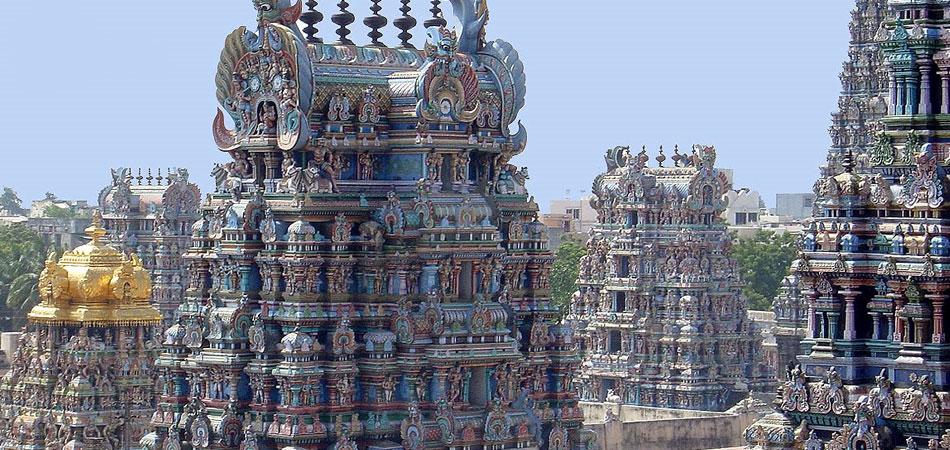
On entering the city we were
blessed by views of the shrines of goddess Kamakshi and the huge gopuram of the Ekambareshwara temple. Saree clad women, pretty girls in
traditional dress (pavadai) men and boys in traditional dhotis and none with an
empty forehead seemed to reassure to effervescence of respect for culture and
tradition.
After taking a look around the
city, visiting close to six significant temples, my heart stood for a second at
the view of the grand gopuram of thevaradaraja swamy temple.
Ah varada! There you are!
The time was a little over 9 PM,
the temple would’ve just closed. All of us knew this, yet there was an urge to
go take a look. Get closer, enter.
 The night was shorter than I
expected, more so because we had had just over 5 hours of sleep. We took a
hurried bath, dressed to look holy and left for the temple. Whoever has visited
tamil nadu would know that no one sleeps in this place! It was barely 4:30 AM
and there were street vendors, open petty stores, and so many people awake! Or
maybe it’s because they want to look fresh at least till the sun shows up.
The night was shorter than I
expected, more so because we had had just over 5 hours of sleep. We took a
hurried bath, dressed to look holy and left for the temple. Whoever has visited
tamil nadu would know that no one sleeps in this place! It was barely 4:30 AM
and there were street vendors, open petty stores, and so many people awake! Or
maybe it’s because they want to look fresh at least till the sun shows up.
The booming echo of sacred hymns
and the aroma of fresh flowers and scented aroma sticks welcomed us into the
main chamber where the lord stood tall behind closed doors.
As the doors were opened a hundred
heads bowed low and two hundred eyes stuck wide open to observe the beautiful
deity. His smile! The god was smiling!
More chanting continued and we tried to join in. For me, the size and
grace seemed to be overwhelming. Standing tall at over 10 feet, the lord held
weapons in two of his hands, shankha in his top left hand and his lower right
hand gesturing a fore palm or the abhayam,
the fore palm is to tell us not to fear for he is here.
 More than anything, it was his
fore palm, or the abhayam that got me interested, as I continued to stare at it,
I realized that there was something written on it. It was in tamil, but only 3
letters, and I was able to read that much, it said, mashucha; a Sanskrit word meaning “don’t be sad”.
More than anything, it was his
fore palm, or the abhayam that got me interested, as I continued to stare at it,
I realized that there was something written on it. It was in tamil, but only 3
letters, and I was able to read that much, it said, mashucha; a Sanskrit word meaning “don’t be sad”.
After teertha-shathari (and of
course who can miss hot pongal) we made our way out to the kalyani to wash our
hands and perform the morning sandhyavandana. As I was offering arghyam
(offering water along with gayatri mantra to sun god) I could feel that I was
at peace. Suddenly, warm creepers of detachment had attached themselves to me.
 After nearly 3 months from my
visit. While looking at old pics of close friends I pondered why we miss
certain people, why are we so attached? Why is being away from them so sad?
After nearly 3 months from my
visit. While looking at old pics of close friends I pondered why we miss
certain people, why are we so attached? Why is being away from them so sad?
That’s when I remembered my
kanchipuram visit. I realized that I had never been afraid in my life. It was
the fear of sadness that gripped me. I was scared of being sad.
I taught myself what the abhayam
of the smiling god meant.
Don’t be afraid, don’t be sad.
Don’t be afraid of ever being sad.


